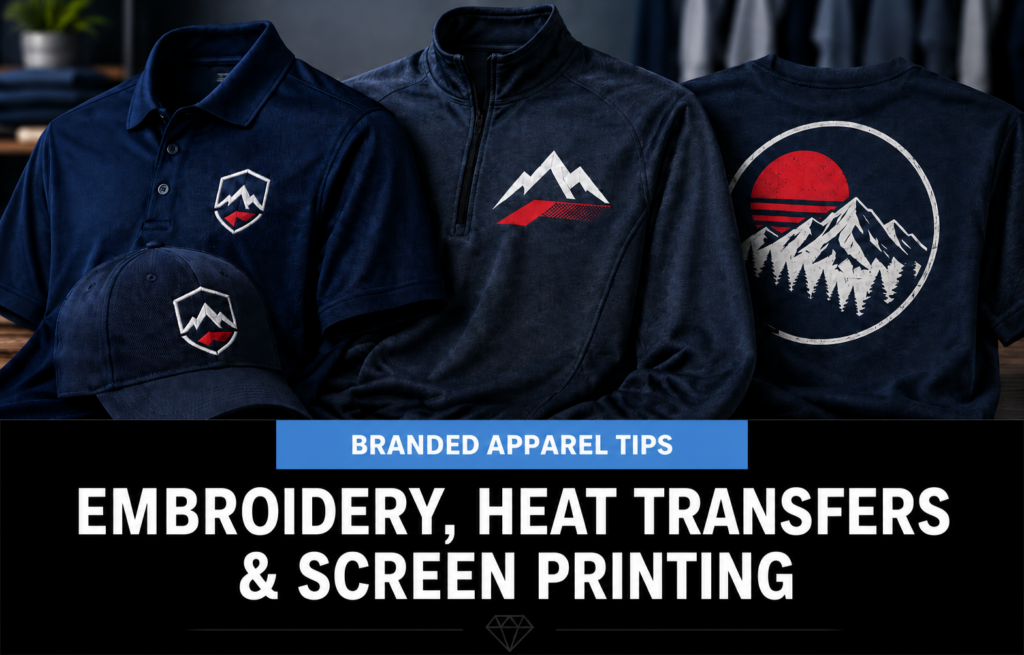
Branded apparel is one of the easiest ways to make your business look more professional, consistent, and recognizable. Whether you’re outfitting a team, preparing for an event, creating uniforms, or ordering customer-facing apparel, the decoration method you choose matters.
The three most common options are embroidery, heat transfers, and screen printing. Each one has its place, and the best choice usually depends on the garment, the design, the quantity, and how the apparel will be used.
Embroidery
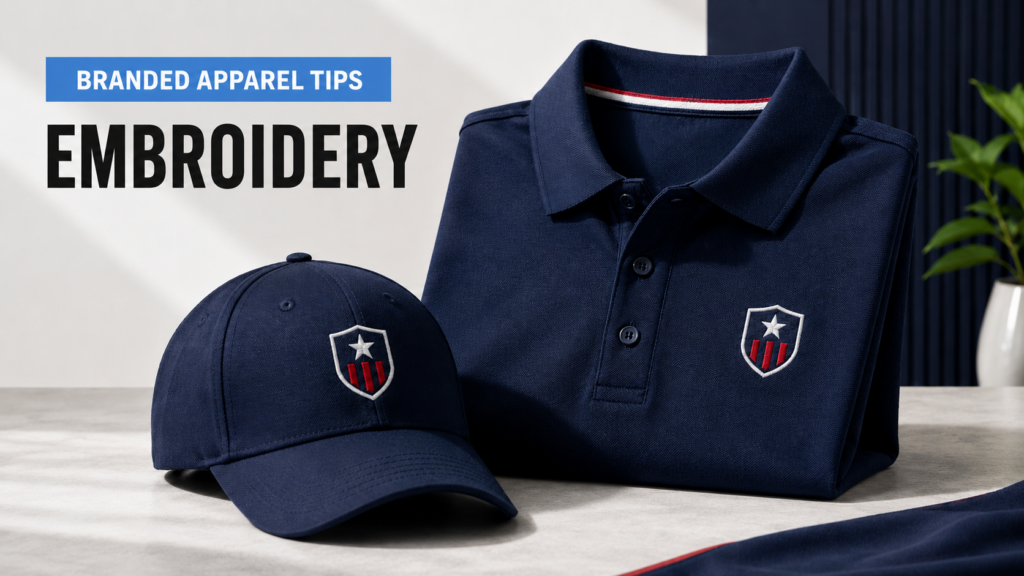
Embroidery uses thread stitched directly into the garment. It’s one of the most popular choices for polos, hats, jackets, quarter-zips, and professional uniforms.
Pros of embroidery
Embroidery has a clean, premium look that works especially well for company logos. It feels more permanent and polished than many other decoration methods, which is why it’s often used for uniforms, corporate apparel, and customer-facing staff.
It also holds up well over time, especially on thicker garments like polos, outerwear, fleece, and hats.
Cons of embroidery
Embroidery is not ideal for every design. Small text, gradients, fine details, and large full-front graphics can be difficult to reproduce cleanly with thread. It can also add weight or stiffness to lightweight fabrics if the design is too large.
Best uses for embroidery
- Professional team apparel
- Polos
- Hats
- Jackets
- Quarter-zips
- Uniform shirts
- Left-chest logos
Heat Transfers
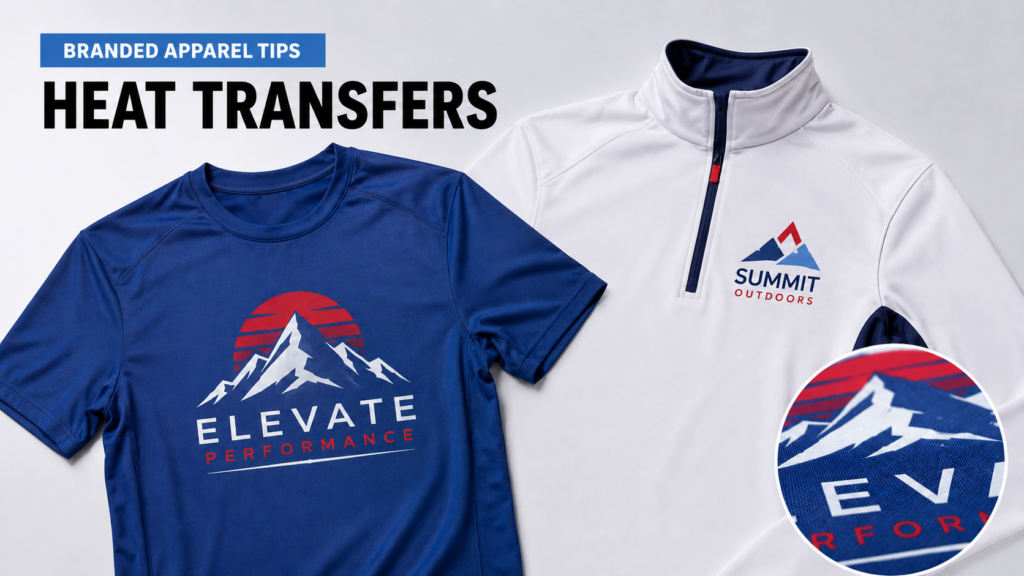
Heat transfers use heat and pressure to apply a printed design onto apparel. This method works well for detailed graphics, full-color logos, names, numbers, and smaller quantity orders.
Pros of heat transfers
Heat transfers are flexible and can reproduce more detail than embroidery. They’re helpful when a design includes multiple colors, gradients, or smaller details that may not stitch well.
They’re also a good option for pantone color matching, smaller runs, personalization, and garments that need names, numbers, departments, or locations added.
Cons of heat transfers
Heat transfers may not have the same premium feel as embroidery, and the final result can vary depending on the garment type and transfer material used. However–recent advancements in transfer material and processes makes them durable and cost-effective.
Best uses for heat transfers
- Detailed full-color designs
- T-shirts and sweatshirts
- Performance shirts
- Lightweight polos
- Athletic apparel
- Event apparel
- Names and numbers
- Small batch orders
Screen Printing
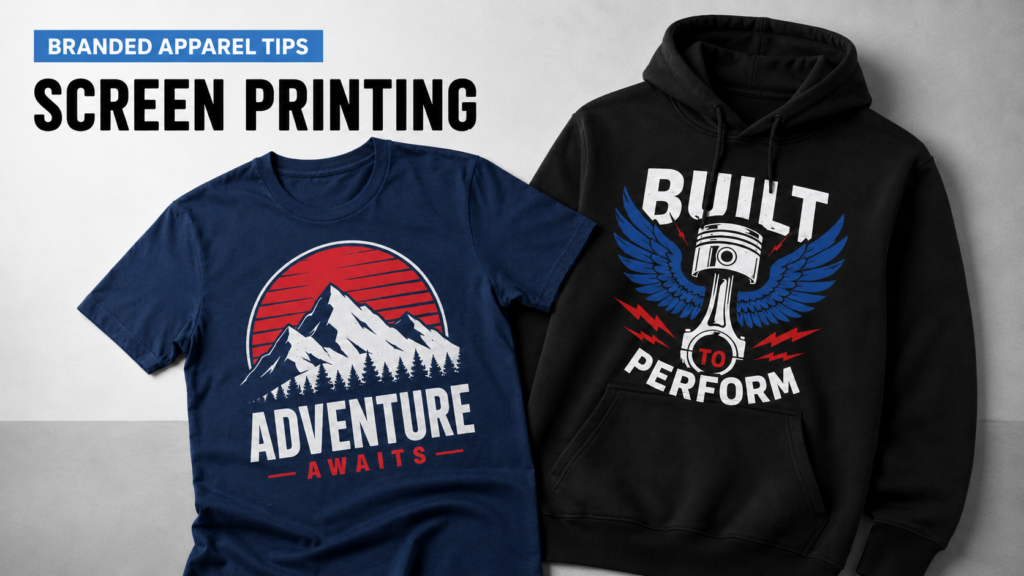
Screen printing pushes ink through a stencil/screen onto the garment. It’s a classic option for t-shirts, hoodies, event apparel, team shirts, and bold promotional designs.
Pros of screen printing
Screen printing is great for larger designs and higher quantities. It creates a bold, durable print and is often very cost-effective when ordering in bulk.
It’s also one of the best options when you want a big graphic on the front or back of a shirt.
Cons of screen printing
Screen printing is usually less efficient for very small orders or highly detailed multi-color designs. Each color typically requires setup, so costs can increase depending on the complexity of the artwork and if the design requires pantone color matching.
It’s also not always the best choice for textured, thick, or highly technical fabrics.
Best uses for screen printing
- T-shirts
- Hoodies
- Large front or back designs
- Bulk apparel orders
Need help with branded apparel?
Choosing between embroidery, heat transfers, and screen printing does not have to be complicated. Tell us what you’re ordering, how it will be used, and what kind of look you want—we’ll help guide you toward the best option.