NWPC Marketing Solutions Is a Wix Studio Certified Expert Developer

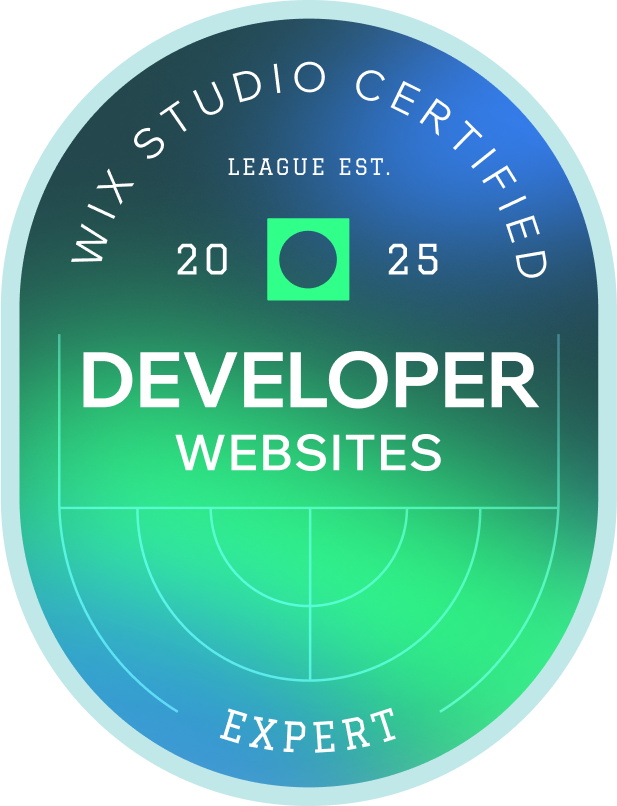
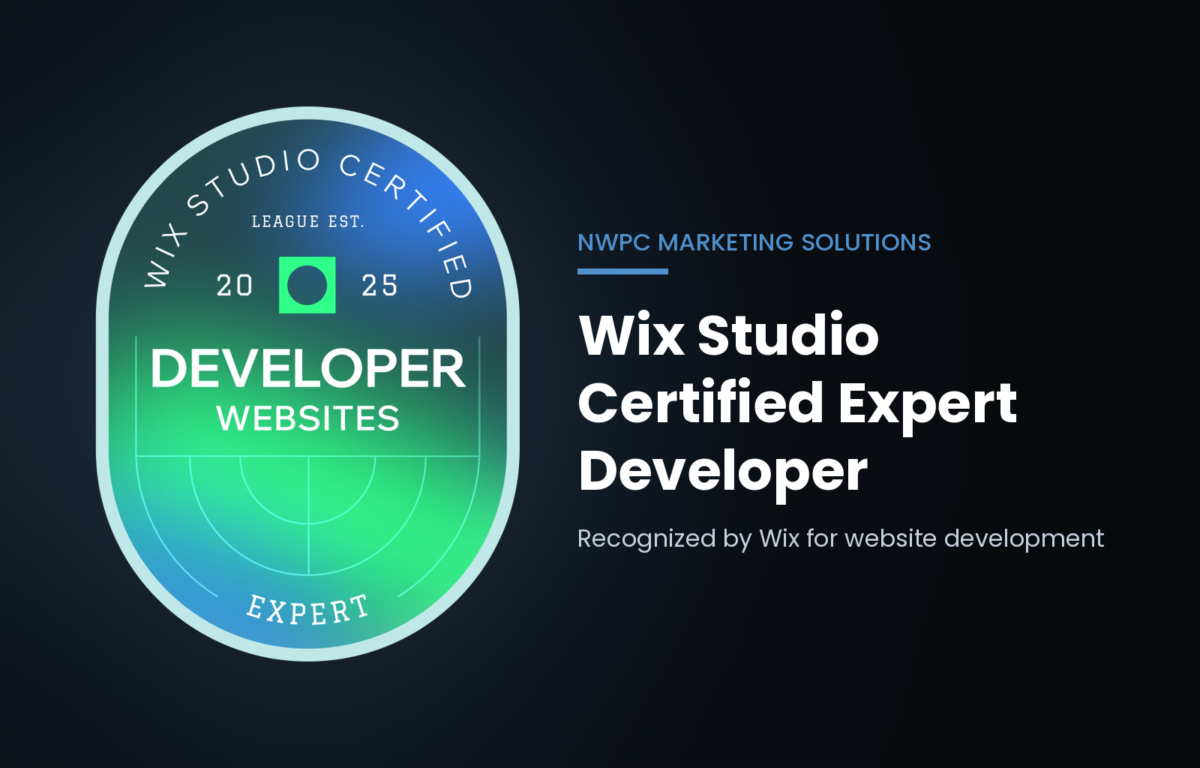
NWPC Marketing Solutions is now a Wix Studio certified developer. Wix has recognized our team at the Expert level as a Developer for websites. We’re proud of it, and it reflects the technical work our developers do every day.

Keep reading to learn more about what this certification is, how Wix awards it, and what it means when you hire our team to build your website.

Wix Studio Certified Expert Developer badge for websites earned by NWPC Marketing Solutions
What is a Wix Studio certified developer?

A Wix Studio certified developer is a web creator Wix has recognized for building advanced, secure websites on Wix Studio. Certified creators join the Studio League, Wix’s official community of certified Studio creators.

Wix offers two Expert certifications: Web Designer and Developer. Ours is the Developer certification for websites. In short, it focuses on the code and logic behind a site, not only how it looks.

How Wix awards the Developer certification

There is no test and no application. Instead, Wix reviews Studio portfolios every month. Then it certifies creators whose real client work meets its standards.

According to Wix, the Developer criteria for websites include:

  • Premium projects: at least three premium sites built with Wix Studio, with traffic.
  • Advanced backend code: for example, third-party integrations such as Stripe, Twilio or SendGrid, backend events, custom routers, data hooks, HTTP functions or scheduled jobs.
  • Secure code: sites must not expose secret keys.
  • Development activity: 14 or more coding days in Wix Studio.
  • Performance tracking: active use of monitoring tools for debugging and performance.

In addition, each certification has its own ID. Wix validates that ID on a protected Wix Studio page, so others can confirm it’s authentic.

What hiring a Wix Studio certified developer means for you

Put simply, the certification is independent proof of hands-on development work. Wix reviewed live projects, not a quiz score.

For you, that shows up in a few practical ways:

  • Your site can connect to tools you already use, like payment, email or text services.
  • Sensitive details, such as API keys, stay protected.
  • Custom features, like automated tasks or data rules, are built in from the start.
  • Performance monitoring continues after launch, not just on launch day.

That said, a certification is one signal among several. You should still review a developer’s past work. Also ask how updates will work and who will maintain the site.

Built on real Wix Studio projects

Because Wix certifies creators based on live client work, the sites we build are the proof behind this badge.

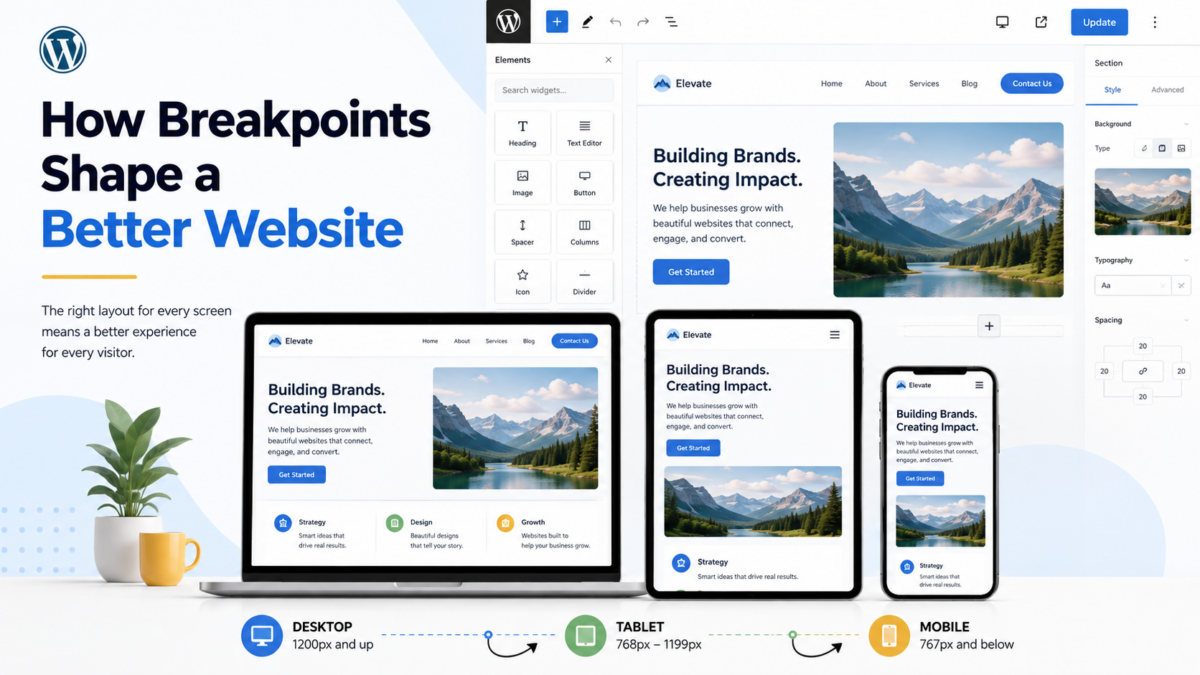
On every build, we also plan layouts that work on every screen, as we cover in how our developers use breakpoints. And while Wix Studio is our focus here, we also build on other platforms when a project calls for it; such as WordPress, Shopify, Squarespace, React, and more.

Why this certification matters to NWPC

NWPC is a family-owned, full-service marketing agency in Plymouth, Michigan, with more than 40 years in business. Besides web design and SEO, we handle custom portals, print, signage, promotional products, apparel, and warehousing and fulfillment.

As a result, many of our web projects connect to other parts of a client’s business. For instance, we build employee stores and uniform ordering portals for multi-location and nationwide teams. That kind of work needs solid development behind it. This certification is one more way to show that depth.

Frequently asked questions

What is the Wix Studio League?

The Studio League is Wix’s official community of certified Wix Studio creators. Wix scouts and certifies members based on the work they build in Wix Studio.

Do you have to pass a test to become a Wix Studio certified developer?

No. Wix says there are no tests and no applications. Instead, it reviews portfolios each month and certifies creators whose work meets its criteria.

What’s the difference between the Web Designer and Developer certifications?

The Web Designer certification focuses on polished, responsive and accessible design. In contrast, the Developer certification focuses on backend code, integrations, security and performance monitoring.

Let’s talk about your website

Whether you’re planning a new site or improving the one you have, we’d be glad to help. Learn more about our web design and SEO services, or contact our team to start the conversation.

Weekly Roundup 3/27/26: 5 Quick Answers on Apparel, SEO, AI Search, Window Graphics & Websites

Welcome to our Weekly Marketing Roundup—a quick Friday post from NWPC Marketing Solutions that answers a handful of the questions we hear most from business owners and marketing teams. No fluff, just clear, practical answers you can use right away.


1) Embroidery vs. screen printing — which is better for uniforms and branded polos?

Answer: Embroidery is best for polos, hats, and professional uniforms where you want a premium, durable look. Screen printing is best for t-shirts, hoodies, and larger designs where you want bold color and lower cost at higher quantities.


2) If I’m a local business, what should I focus on first for SEO?

Answer: Start with service pages (clear, specific, conversion-focused). Add location pages if you serve multiple cities/areas. Use blogging to support both by answering customer questions and targeting long-tail searches.


3) How is AI changing Google search, and what should I do so my business still shows up?

Answer: AI results often summarize answers and cite sources. To stay visible, keep your website clear, helpful, and up to date—with strong service pages, FAQs, and content that answers real questions. Make sure your site structure and on-page SEO are clean so search engines can understand what you do.


4) Perforated window vinyl vs. frosted vinyl — which should I use for my storefront?

Answer: Use perforated vinyl when you want marketing visibility from outside while still seeing out from inside. Use frosted vinyl when your priority is privacy and a clean, professional look (great for offices, clinics, and financial services).


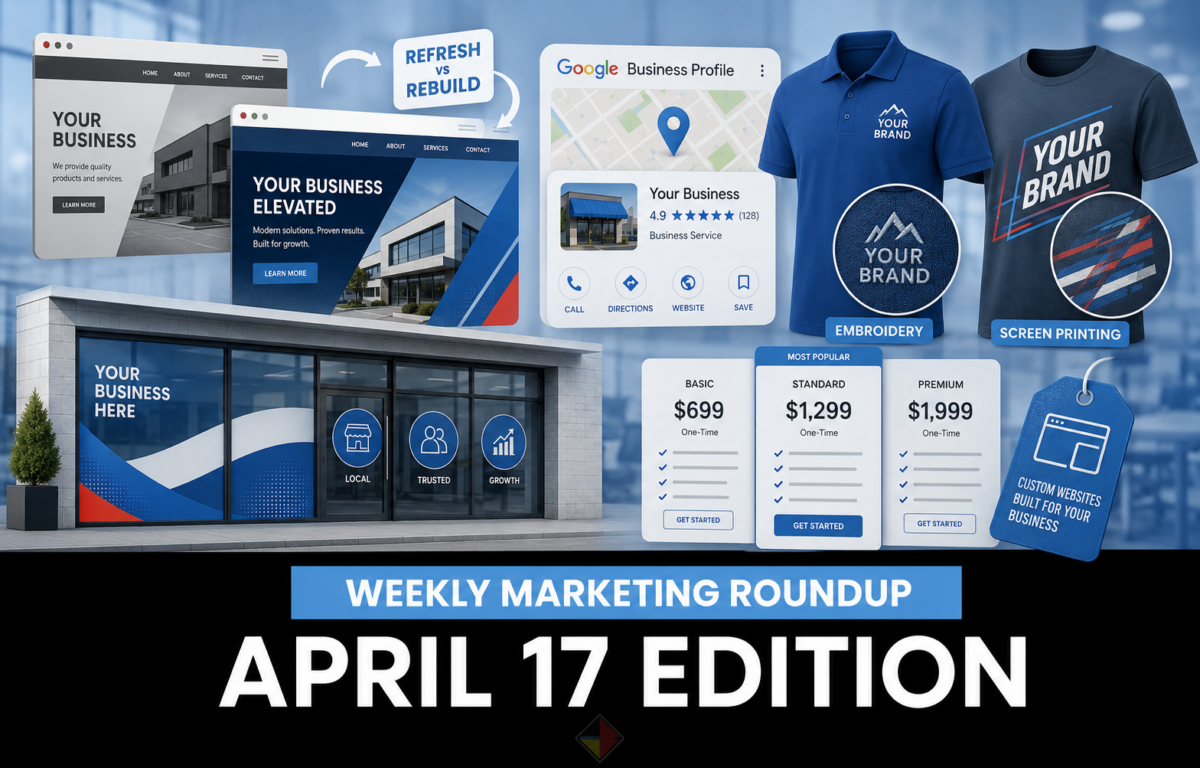
5) Website refresh vs. rebuild — how do I know which one I need?

Answer: Choose a refresh if the site works but looks dated or isn’t converting well. Choose a rebuild if the site is slow, hard to update, has structural SEO issues, or your platform is limiting growth.


Need help with any of these?

If you want a quick recommendation for your specific situation—apparel, SEO/content, window graphics, or a website upgrade—NWPC can help you choose the best option and handle the execution.

This field is for validation purposes and should be left unchanged.
Name(Required)

Why Your Website Should Have a Blog (And How SEO Snowballs Over Time)

If your website is supposed to bring in leads, it needs more than a homepage and a few service pages. Those pages are important—but they only cover a small slice of what people actually search for.

A blog is how your website starts showing up for the questions, comparisons, and “I’m trying to figure this out” searches that happen before someone is ready to contact you. It’s also one of the simplest ways to keep your website active, expand what you rank for, and build long-term organic visibility.


A blog gives your website more chances to show up in Google and other search engines.

Most business websites have a handful of core pages but that’s not enough to capture the variety of searches people use. Blog posts let your website target dozens (or hundreds) of additional searches like:

  • “How much does ___ cost?”
  • “What’s the difference between ___ and ___?”
  • “Do I need ___ or ___?”
  • “Best way to ___”
  • “Common mistakes with ___”

Those searches are where many leads start. If your website can answer them, you’re in the running.


Blogging keeps your website fresh and “alive”

Search engines crawl websites to find new and updated content. When your site hasn’t changed in a long time, you’re not giving crawlers much to work with—and you’re not giving customers a reason to come back.

A consistent blog cadence adds new pages, updates your internal linking, and signals ongoing relevance–it helps show that your website is maintained and active.


Blog posts build trust before the customer ever contacts you

A strong blog does more than rank on search engines. It answers real customer questions and makes your business the obvious choice.

When someone reads a helpful article on your site, you’ve already done part of the sales process:

  • You’ve explained the topic clearly
  • You’ve reduced uncertainty
  • You’ve shown expertise without a hard pitch

That’s why blog-driven leads are often higher quality—because they’ve already learned from you.


Blogging supports your most important pages

One of the best uses of a blog is to strengthen your money pages.

Each blog post can link back to:

  • A specific service page
  • A location page
  • A contact/quote page

This builds a web of relevance and helps search engines understand what you want to be known for—while guiding readers to the next step.


AI-powered search results (like AI summaries and conversational search) often answer questions directly and cite the sources they pulled from. That means your goal isn’t only “get the click” anymore—it’s also be the source the AI chooses to reference.

Blog posts are one of the best ways to earn that attribution–when your site consistently publishes helpful blog content, it increases the chances your pages show up as a cited source in AI results—so even if a user doesn’t click immediately, your brand still gets visibility, trust, and a better shot at being the business they contact when they’re ready.


SEO is a long game (and it snowballs)

Here’s the honest part: blogging for SEO usually doesn’t explode overnight.

SEO works more like compounding interest. One good blog post may bring in a small amount of traffic at first. Then it gets indexed, starts ranking for more variations, earns clicks, gets linked internally, and builds credibility over time. Add another post next month. Then another. Now your site is ranking for dozens of terms instead of a few.

That’s the snowball:

  • More content → more keywords → more visibility
  • More visibility → more clicks → more engagement signals
  • More engagement → more trust → more leads

Consistency is what turns “a few posts” into a real inbound channel.


Metadata: The part most businesses miss

Many companies write blog posts and hit publish—but skip the setup that helps posts rank. There is actually a front side and back side:

Front side (what readers see)

  • Clear topic and intent
  • Helpful structure and headings
  • Simple language and real-world examples
  • Calls-to-action that guide readers to contact you

Back side (what search engines see)

This is where many blogs are lacking–SEO details that help content build momentum:

  • SEO title and meta description written for search clicks
  • Keyword focus + supporting phrases
  • Clean URL slug
  • Proper heading structure (H1/H2/H3)
  • Internal linking to support service pages
  • Basic formatting and image optimization

This is how blog posts become a measurable SEO asset—not just “news updates.”


If keeping up with blogging feels like one more thing on an already full plate, you’re not alone. A lot of teams know they should post consistently—they just don’t have the time to plan topics, write drafts, and get everything published correctly (including the SEO details).

That’s where we can help! NWPC can handle the writing and the behind-the-scenes setup, and you still stay in the driver’s seat with a simple monthly check-in to review topics and approve content before anything goes live. It keeps your website active and moving in the right direction without you having to babysit the process.

Get blog help from our experts!

Name(Required)